

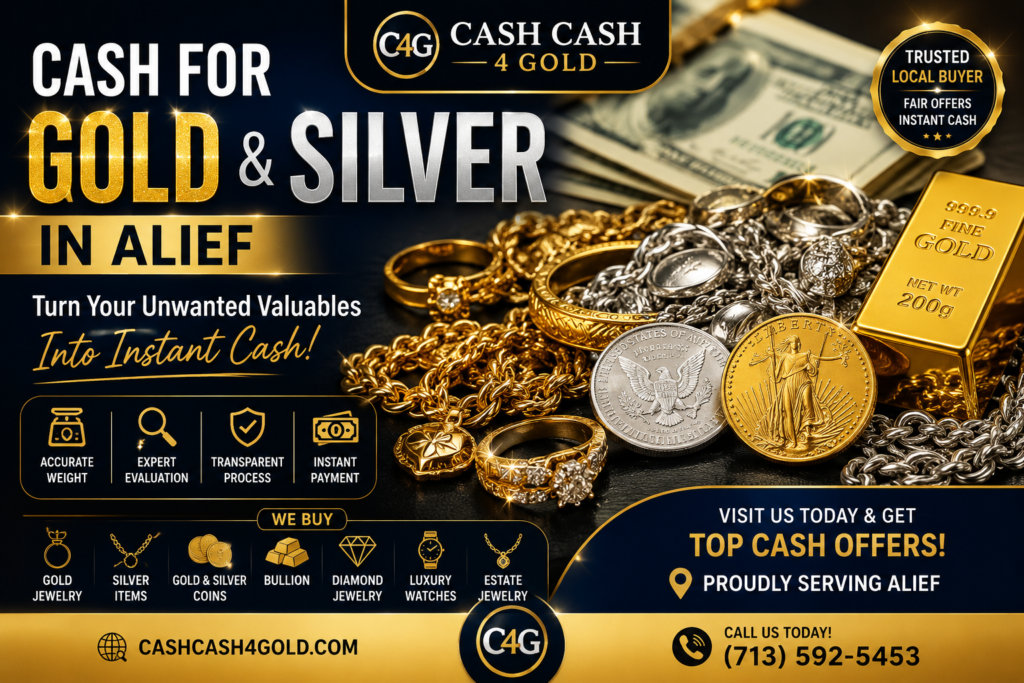
Gold and silver have always been among the most valuable precious metals in the world. Whether you own broken jewelry, old necklaces, unwanted rings, silver coins, bullion, or inherited valuables, these items can often be converted into immediate cash. If you’re searching for cash for gold silver in ALIEF, understanding how the selling process works can help you receive a fair offer while avoiding unnecessary risks.
Many people keep valuable gold and silver items tucked away in drawers or jewelry boxes without realizing their true worth. Some pieces may no longer match your style, while others may be damaged, outdated, or inherited from family members. Instead of allowing these valuables to collect dust, selling them to a reputable precious metal buyer can provide extra cash for emergencies, home improvements, vacations, debt repayment, or everyday expenses.
The biggest concern for most sellers is knowing whether they are receiving a fair price. Gold and silver values fluctuate based on the global precious metals market, meaning prices can change daily. In addition, factors such as purity, weight, condition, and collectible value all influence the final offer. Without understanding these factors, many sellers accept lower offers simply because they are unfamiliar with the valuation process.
Fortunately, choosing an experienced buyer makes the process much easier. Reputable buyers use professional testing methods, accurate digital scales, and current market prices to determine the value of your items. They also explain their evaluation process clearly, allowing you to make an informed decision before completing the sale.
If you’re considering selling locally, trusted Cash for Gold in ALIEF services provide a convenient option for turning unwanted precious metals into cash while receiving professional assistance throughout the transaction.
This comprehensive guide covers everything you need to know about cash for gold silver in ALIEF. You’ll learn how professional buyers evaluate precious metals, why selling locally is often beneficial, how to maximize your payout, common mistakes to avoid, useful selling tips, available services, and answers to frequently asked questions. By the end of this guide, you’ll have the knowledge and confidence to make smart decisions and get the best possible value for your gold and silver.
What Is Cash for Gold Silver in ALIEF?
The term cash for gold silver in ALIEF refers to the process of selling gold and silver items to a professional buyer in exchange for immediate payment. Instead of leaving unused valuables in a drawer, many people choose to sell them for cash when they no longer need them or want to take advantage of current precious metal prices.
Gold and silver buying services evaluate your items based on several important factors, including metal purity, weight, current market value, and in some cases, collectible or resale demand. After the evaluation is complete, the buyer presents an offer, and if you accept it, you receive payment immediately.
This process is designed to be straightforward, transparent, and convenient. Whether you have a single gold ring or an entire collection of precious metals, reputable buyers make the selling experience simple while ensuring your items are professionally assessed.
What Types of Items Can You Sell?
Many people believe only gold jewelry has value, but professional precious metal buyers typically purchase a wide variety of items. These may include:
- Gold rings
- Gold necklaces
- Gold bracelets
- Gold earrings
- Wedding bands
- Broken gold jewelry
- Scrap gold
- Silver jewelry
- Sterling silver flatware
- Silver coins
- Gold coins
- Gold bullion
- Silver bullion
- Luxury watches
- Diamond jewelry
- Estate jewelry
- Antique jewelry
- Dental gold (where accepted)
Even items that are scratched, broken, outdated, or missing stones may still contain valuable precious metals and qualify for an attractive offer.
How Do Buyers Determine Value?
One of the biggest misconceptions is that buyers simply estimate a price by looking at the jewelry. In reality, reputable buyers follow a professional evaluation process.
Several factors influence the final offer:
Metal Purity
Gold is commonly available in different purity levels, including:
| Gold Purity | Karat |
|---|---|
| 10K | 41.7% Gold |
| 14K | 58.5% Gold |
| 18K | 75% Gold |
| 22K | 91.6% Gold |
| 24K | 99.9% Pure Gold |
Higher purity generally means greater value because the item contains more pure gold.
Silver is usually evaluated as:
- Sterling Silver (.925)
- Fine Silver (.999)
- Coin Silver
- Industrial Silver
Weight
After purity is confirmed, buyers weigh the items using calibrated digital scales. Since precious metals are priced by weight, heavier items generally have greater value.
Current Market Prices
Gold and silver prices change daily based on international commodity markets. Professional buyers monitor these market rates closely to calculate competitive offers.
Condition of the Item
Unlike traditional jewelry stores, precious metal buyers often purchase:
- Broken chains
- Bent rings
- Damaged bracelets
- Single earrings
- Scrap jewelry
Since the value primarily comes from the metal itself, cosmetic damage often has little effect on the offer.
Why Do People Sell Gold and Silver?
People choose to sell precious metals for many different reasons.
Some common situations include:
- Unused or outdated jewelry
- Inherited collections
- Financial emergencies
- Downsizing possessions
- Upgrading jewelry
- Decluttering the home
- Taking advantage of high gold prices
- Selling duplicate items
Whatever the reason, selling unwanted valuables can be a practical way to convert unused assets into immediate cash.
Local Buyers Offer Added Convenience
Working with a local precious metal buyer provides several advantages. You can meet face-to-face with experienced professionals, ask questions during the evaluation, and receive payment without waiting for mail-in processing.
Many sellers also appreciate the transparency of watching their items being weighed and tested in person, which builds confidence throughout the transaction.
If you also own silver items, learning more about Cash for Silver services can help you understand how different silver products are evaluated and purchased alongside gold.
Understanding the Selling Process
Although every buyer may have slight differences in their procedures, the overall process usually follows these steps:
- Bring your gold or silver items for evaluation.
- The buyer tests purity using professional equipment.
- Each item is accurately weighed.
- Current precious metal market prices are reviewed.
- A fair offer is presented.
- You decide whether to accept or decline.
- If accepted, payment is made immediately.
This transparent process allows sellers to understand exactly how their items are valued before making a final decision.
Understanding what cash for gold silver in ALIEF really means is the first step toward making informed selling decisions. Once you know how buyers determine value and what affects pricing, you are in a much stronger position to maximize your return and enjoy a smooth, hassle-free selling experience.
Why Cash for Gold Silver in ALIEF Is Important
Selling unwanted precious metals is more than simply exchanging jewelry for money. Choosing cash for gold silver in ALIEF allows individuals to unlock the value of items they no longer use while benefiting from a professional and transparent selling process. Whether you have broken gold jewelry, inherited silver coins, or old bullion stored away, these valuables can become an immediate source of cash when sold to a reputable buyer.
Many people underestimate the worth of their gold and silver because they focus on the appearance of the item rather than its precious metal content. A damaged necklace or a single earring may seem worthless, but if it contains genuine gold or sterling silver, it can still hold significant value. This is why understanding the importance of professional evaluations is essential.
Turn Unused Valuables into Immediate Cash
One of the biggest advantages of selling gold and silver is the ability to convert items you no longer need into cash without taking on debt. Instead of letting old jewelry sit unused for years, you can put its value to better use.
People often sell precious metals to:
- Pay unexpected bills
- Cover emergency expenses
- Fund home improvement projects
- Save for vacations
- Reduce financial stress
- Invest in other opportunities
- Upgrade to new jewelry
- Declutter their homes
Selling unwanted items is a simple way to make the most of assets that would otherwise remain unused.
Benefit from Strong Precious Metal Prices
Gold and silver have long been recognized as valuable commodities. Their prices fluctuate based on global economic conditions, supply, demand, and investor activity. During periods of high market prices, selling your precious metals can provide an excellent return.
Because prices change regularly, many sellers monitor market trends before deciding when to sell. Working with an experienced buyer who follows current market rates helps ensure you receive a competitive offer based on real-time values.
Professional Evaluations Build Confidence
Many first-time sellers worry that they won’t know whether an offer is fair. Reputable buyers eliminate this uncertainty by carefully evaluating each item using professional methods.
A thorough evaluation generally includes:
- Testing metal purity
- Measuring accurate weight
- Checking for collectible value
- Reviewing current market prices
- Explaining how the final offer is calculated
This transparent approach allows sellers to understand exactly how their valuables are priced, making the process more comfortable and trustworthy.
Selling Locally Offers Greater Convenience
Choosing a local buyer provides several practical benefits. Instead of shipping valuable items through the mail, you can visit a trusted location, speak directly with knowledgeable professionals, and receive payment quickly if you decide to sell.
Local services also allow you to ask questions during the evaluation process, making it easier to understand your options before accepting an offer.
More Than Just Gold Jewelry
Many people assume only traditional gold jewelry has resale value, but professional buyers often purchase a much wider variety of precious metal items.
These may include:
| Item Type | Common Examples |
|---|---|
| Gold Jewelry | Rings, necklaces, bracelets, earrings |
| Silver Jewelry | Chains, bracelets, pendants |
| Coins | Gold coins, silver coins |
| Bullion | Gold bars, silver bars |
| Watches | Luxury watches containing precious metals |
| Estate Jewelry | Family heirlooms and antique pieces |
| Diamond Jewelry | Rings, earrings, necklaces with diamonds |
Understanding the full range of accepted items helps sellers recognize opportunities they may have overlooked.
Fair Offers Depend on Knowledge
Being informed before selling is one of the best ways to maximize your return. Knowing your item’s approximate purity, understanding current market conditions, and comparing offers from reputable buyers can all contribute to a better outcome.
For example, someone selling a 14K gold bracelet and sterling silver flatware may receive a more accurate valuation by visiting a buyer experienced in handling multiple types of precious metals rather than selling them separately without research.
Professional Buyers Handle Valuable Collections
Some individuals inherit collections containing gold coins, bullion, luxury watches, or diamond jewelry. These items often require specialized evaluation because their value may extend beyond the precious metal alone.
If your collection includes investment-grade coins or bullion, reputable Gold Coin & Bullion Buyers can provide expert evaluations based on both metal content and current market demand.
Peace of Mind Throughout the Selling Process
Perhaps the greatest benefit of working with experienced buyers is the confidence that comes from a transparent transaction. Professional evaluations, honest communication, and clear pricing help remove uncertainty from the process, allowing sellers to make informed decisions without pressure.
Ultimately, understanding the importance of cash for gold silver in ALIEF empowers you to protect the value of your precious metals while choosing the right buyer. Whether you’re selling a single gold ring or an entire collection, being informed helps you receive fair value, avoid common pitfalls, and enjoy a smooth, stress-free selling experience.
Step-by-Step Guide to Selling Gold and Silver in ALIEF
Selling your precious metals doesn’t have to be complicated. Whether you have a few pieces of old jewelry or a larger collection of valuable items, following the right process can help you receive a fair offer and enjoy a smooth experience. If you’re planning to sell through a cash for gold silver in ALIEF service, the following step-by-step guide will help you prepare and make informed decisions.
Step 1: Gather All Your Gold and Silver Items
The first step is to collect every item you may want to sell. Many people forget they own valuable pieces stored in jewelry boxes, safes, drawers, or storage containers.
Look for items such as:
- Gold rings
- Gold necklaces
- Bracelets
- Earrings
- Wedding bands
- Broken jewelry
- Gold coins
- Silver coins
- Sterling silver flatware
- Gold bullion
- Silver bullion
- Luxury watches
- Diamond jewelry
- Estate jewelry
Even if an item is damaged or incomplete, it may still contain valuable precious metals.
Step 2: Separate Gold and Silver by Type
Organizing your items before visiting a buyer makes the evaluation process easier.
For example:
| Category | Examples |
|---|---|
| Gold Jewelry | Rings, necklaces, bracelets |
| Silver Jewelry | Chains, bangles, earrings |
| Coins | Gold coins, silver coins |
| Bullion | Gold bars, silver bars |
| Watches | Luxury branded watches |
| Diamond Jewelry | Engagement rings, pendants |
Keeping similar items together allows for a faster and more accurate assessment.
Step 3: Check for Purity Marks
Most gold and silver items have small stamps that indicate their purity.
Common gold markings include:
- 10K
- 14K
- 18K
- 22K
- 24K
Silver items often display markings such as:
- 925
- Sterling
- 999
- Fine Silver
While these stamps provide useful information, professional buyers will still perform their own testing to verify authenticity.
Step 4: Learn the Current Market Value
Gold and silver prices change daily due to global market conditions. Before selling, it’s helpful to understand the current value of precious metals.
Although you don’t need to calculate the exact value of your items, having a general idea of market prices allows you to better understand the offer you receive.
Factors affecting market prices include:
- Global economic conditions
- Supply and demand
- Inflation
- Interest rates
- Currency fluctuations
- Investor demand
Being informed gives you greater confidence during negotiations.
Step 5: Understand What Determines the Offer
Many first-time sellers believe buyers only consider weight, but several factors influence the final offer.
Professional buyers evaluate:
- Metal purity
- Total weight
- Current gold and silver prices
- Condition
- Brand (for watches)
- Collectible value
- Antique value
- Diamond quality (if applicable)
Items with collectible or historical significance may be worth more than their metal value alone.
Step 6: Bring Any Available Documentation
Although not required, supporting documents may increase buyer confidence.
Helpful documents include:
- Original purchase receipts
- Certificates of authenticity
- Coin grading certificates
- Diamond certifications
- Watch documentation
- Original packaging
These documents can sometimes simplify the evaluation process and support higher offers for collectible items.
Step 7: Choose a Reputable Buyer
Not all gold buyers operate the same way. Selecting an experienced and trustworthy buyer is one of the most important decisions you’ll make.
Look for businesses that offer:
- Transparent evaluations
- Professional testing equipment
- Accurate digital scales
- Competitive pricing
- Clear explanations
- Friendly customer service
- Immediate payment
- Positive customer reputation
Taking time to research your options helps protect the value of your precious metals.
Step 8: Ask Questions During the Evaluation
Never hesitate to ask how your items are being evaluated.
Some useful questions include:
- How was the purity determined?
- What is today’s gold price?
- What is today’s silver price?
- How much does my item weigh?
- Is this valued as scrap or collectible?
- How was the final offer calculated?
A professional buyer should be willing to answer these questions openly.
Step 9: Review the Offer Carefully
Once the evaluation is complete, carefully consider the offer before making a decision.
Ask yourself:
- Does the offer reflect current market conditions?
- Was the evaluation explained clearly?
- Do I understand how the value was determined?
- Am I comfortable with the transaction?
Remember that you are never obligated to accept an offer immediately.
Step 10: Consider Additional Valuable Items
Many sellers initially bring only gold jewelry, forgetting they may own other valuable assets.
Professional buyers often purchase:
- Gold coins
- Silver bullion
- Estate jewelry
- Luxury watches
- Diamond jewelry
If you also own luxury timepieces, professional Sell Watches for Cash services can evaluate eligible watches alongside your gold and silver, making the selling process even more convenient.
Step 11: Complete the Sale
If you’re satisfied with the offer, the final step is completing the transaction.
The process generally includes:
- Confirming the offer.
- Providing any required identification.
- Completing the necessary paperwork.
- Receiving payment according to local regulations.
Working with a reputable buyer ensures the process is straightforward and transparent.
Step 12: Keep a Record of Your Transaction
After the sale, it’s a good idea to keep copies of any receipts or documentation provided. Maintaining records can be useful for personal financial tracking and future reference.
Additional Tips for a Successful Selling Experience
To maximize your return, keep these practical recommendations in mind:
- Compare offers from reputable buyers.
- Avoid rushing into the first offer you receive.
- Monitor current gold and silver market prices.
- Clean your jewelry gently without damaging it.
- Bring all related accessories or documentation.
- Separate collectible items from scrap jewelry.
- Ask questions throughout the evaluation process.
- Work only with buyers who explain their pricing clearly.
Why Following These Steps Matters
Selling precious metals is not just about receiving immediate cash—it is about making informed financial decisions. By understanding how buyers evaluate gold and silver, preparing your items properly, and choosing a trusted buyer, you significantly increase your chances of receiving a competitive and fair offer.
Whether you are selling a single gold ring, inherited silver coins, or a complete collection of precious metals, following this step-by-step approach helps ensure a secure, transparent, and rewarding experience. Taking the time to prepare before selling can make a meaningful difference in both your confidence and your final payout.
Best Practices and Expert Tips for Selling Gold and Silver in ALIEF
Selling precious metals is not just about finding a buyer—it’s about making informed decisions that help you receive the best possible value. Whether you’re selling a few pieces of jewelry or an entire collection, following proven strategies can improve your overall experience. If you’re looking for cash for gold silver in ALIEF, these expert tips will help you maximize your return while avoiding unnecessary risks.
Research the Current Precious Metal Market
Before visiting a buyer, spend a few minutes checking the latest gold and silver market prices. While buyers determine offers based on several factors, understanding current market trends gives you a better idea of what your items may be worth.
Market prices are influenced by:
- Global economic conditions
- Inflation
- Currency values
- Investor demand
- Supply and demand
- International trading activity
Being aware of these factors helps you make more informed selling decisions.
Understand the Purity of Your Items
Gold and silver are available in different purity levels, and knowing what you own can help you better understand the buyer’s evaluation.
Common gold purity markings include:
| Marking | Gold Content |
|---|---|
| 10K | 41.7% |
| 14K | 58.5% |
| 18K | 75% |
| 22K | 91.6% |
| 24K | 99.9% |
For silver, common markings include:
- Sterling (.925)
- Fine Silver (.999)
- Coin Silver
Although professional buyers perform their own testing, recognizing these markings helps you prepare for the valuation process.
Organize Your Items Before the Evaluation
Sorting your valuables before visiting a buyer makes the evaluation more efficient.
Separate items into categories such as:
- Gold jewelry
- Silver jewelry
- Gold coins
- Silver coins
- Bullion
- Luxury watches
- Diamond jewelry
- Estate jewelry
Organization helps both you and the buyer identify items that may have additional value beyond their metal content.
Keep Original Documentation
If available, bring supporting documents with your valuables.
Examples include:
- Purchase receipts
- Certificates of authenticity
- Coin grading reports
- Diamond certifications
- Watch warranty cards
- Original packaging
These documents may help verify authenticity and increase confidence during the evaluation.
Compare Offers from Reputable Buyers
Receiving multiple evaluations is often one of the smartest strategies.
Different buyers may specialize in different types of valuables, including:
- Jewelry
- Coins
- Bullion
- Luxury watches
- Estate collections
Comparing offers allows you to better understand the value of your items before making a final decision.
Don’t Focus Only on Scrap Value
Some gold and silver items have value beyond their precious metal content.
Examples include:
- Antique jewelry
- Designer collections
- Limited-edition coins
- Luxury watches
- Vintage estate pieces
- Diamond jewelry
These items may qualify for higher offers because of their rarity, craftsmanship, or collector demand.
Ask Questions Throughout the Process
Professional buyers appreciate informed customers.
Useful questions include:
- How was the purity tested?
- What market price is being used today?
- Is this item valued as collectible or scrap?
- What factors influenced the final offer?
- Are diamonds evaluated separately?
- Does brand affect the value?
Clear communication helps build trust and confidence.
Understand That Condition Isn’t Everything
Many people avoid selling damaged jewelry because they assume it has little value.
In reality, buyers frequently purchase:
- Broken necklaces
- Bent rings
- Single earrings
- Damaged bracelets
- Scrap jewelry
- Incomplete sets
As long as the precious metal content remains intact, these items often retain considerable value.
Consider Selling Multiple Items Together
Selling several items during one visit can simplify the process.
For example, instead of selling only one gold necklace today and silver coins later, many sellers prefer combining:
- Gold jewelry
- Silver jewelry
- Bullion
- Coins
- Watches
- Diamond pieces
This allows buyers to evaluate the entire collection at once, making the transaction more convenient.
Choose Experience Over Quick Offers
The highest advertised price isn’t always the best overall choice.
An experienced buyer provides:
- Transparent evaluations
- Professional testing equipment
- Honest explanations
- Competitive pricing
- Excellent customer service
A smooth and trustworthy transaction is often just as valuable as the final offer itself.
Know When to Sell
Although no one can perfectly predict precious metal markets, many sellers choose to sell when gold or silver prices are relatively strong.
Watching market trends over time can help you decide whether selling now or waiting may better suit your financial goals.
Explore Additional Selling Opportunities
Many reputable buyers purchase far more than traditional gold jewelry. If your collection includes engagement rings, necklaces with valuable gemstones, or estate pieces, you may benefit from specialized evaluations.
For example, professional Diamond Jewelry Buyers can assess diamond jewelry based on both gemstone quality and precious metal content, helping you receive a more accurate offer.
Protect Yourself During the Selling Process
Keep these simple best practices in mind:
- Work with established buyers.
- Read customer reviews before visiting.
- Bring valid identification if required.
- Request a clear explanation of the valuation.
- Don’t feel pressured to accept an offer immediately.
- Keep copies of receipts after completing the sale.
- Ask questions until you’re comfortable with the process.
Final Expert Advice
Selling precious metals should be a well-informed decision rather than a rushed transaction. By understanding market prices, organizing your valuables, comparing offers, and working with experienced professionals, you greatly improve your chances of receiving fair value.
Following these best practices makes the process of finding cash for gold silver in ALIEF much more rewarding. Whether you’re selling old jewelry, silver coins, bullion, watches, or estate valuables, careful preparation and informed decision-making can help you maximize your payout while ensuring a safe, transparent, and stress-free experience.
Common Mistakes to Avoid When Selling Gold and Silver in ALIEF
Selling precious metals can be a rewarding experience, but many people make avoidable mistakes that reduce the amount they receive. Whether you’re selling old jewelry, silver coins, bullion, or inherited valuables, understanding these common errors can help you make smarter decisions. If you’re searching for cash for gold silver in ALIEF, avoiding the following mistakes will increase your chances of receiving a fair and competitive offer.
Accepting the First Offer Without Comparison
One of the most common mistakes is accepting the first offer without exploring other options. While the first buyer may provide a reasonable quote, another reputable buyer may offer more based on current market conditions or their area of expertise.
Taking a little time to compare offers can help you better understand the value of your precious metals and ensure you’re making an informed decision.
Not Knowing the Purity of Your Items
Many sellers have no idea whether their jewelry is 10K, 14K, 18K, or 24K gold. Similarly, they may not know if their silver items are sterling silver or fine silver.
Although professional buyers test every item, recognizing basic purity markings gives you a better understanding of how your valuables are evaluated.
Ignoring Current Gold and Silver Prices
Gold and silver prices fluctuate daily. Selling without checking current market trends may lead to unrealistic expectations or accepting an offer during a temporary market dip.
While you don’t need to become an expert in commodity markets, reviewing recent price movements helps you understand the timing of your sale.
Assuming Damaged Jewelry Has No Value
Many people throw away or ignore broken jewelry because they think it has become worthless.
Items such as:
- Broken chains
- Bent rings
- Single earrings
- Damaged bracelets
- Scrap gold
- Scrap silver
may still contain valuable precious metals and can often be sold based on their metal content.
Forgetting About Other Valuable Items
Some sellers focus only on traditional jewelry and overlook other items that buyers frequently purchase.
Examples include:
- Gold coins
- Silver coins
- Bullion
- Luxury watches
- Estate jewelry
- Diamond jewelry
- Antique pieces
Checking your home carefully before selling may uncover additional valuables that can increase your total payout.
Selling Collectibles as Scrap
Not every gold or silver item should be valued solely for its metal weight.
Certain items may carry additional value because of:
- Historical significance
- Brand reputation
- Limited production
- Antique craftsmanship
- Collector demand
Before accepting a scrap value offer, ask whether your item has collectible or resale value.
Failing to Ask Questions
Some sellers feel uncomfortable asking how their valuables are evaluated.
Instead, don’t hesitate to ask questions such as:
- How was purity tested?
- What market price was used?
- How was the weight measured?
- Does this item have collectible value?
- What factors influenced the offer?
Professional buyers appreciate informed customers and should explain their evaluation process clearly.
Not Bringing Supporting Documents
Although documentation isn’t always necessary, it can be helpful for certain valuables.
Examples include:
- Purchase receipts
- Diamond certificates
- Coin grading reports
- Watch paperwork
- Original packaging
Providing these documents may simplify authentication and strengthen the evaluation.
Choosing Convenience Over Reputation
Selling to the closest buyer without researching their reputation can sometimes lead to disappointing offers or poor customer service.
Instead, look for businesses known for:
- Transparent pricing
- Professional evaluations
- Honest communication
- Positive customer feedback
- Fair offers
A trusted buyer provides confidence throughout the transaction.
Overlooking Specialized Buyers
Some valuables require expert evaluation beyond standard precious metal testing.
For example:
- Luxury watches
- Investment bullion
- Rare coins
- Diamond jewelry
- Estate collections
Choosing specialists for these items may result in more accurate valuations than selling everything as scrap metal.
If you’re unsure which valuables are accepted, reviewing What We Buy can help you understand the wide range of items that professional buyers commonly evaluate and purchase.
Rushing the Selling Process
Perhaps the biggest mistake is making a rushed decision because you need immediate cash.
Instead:
- Compare reputable buyers.
- Understand current market prices.
- Ask questions.
- Review the offer carefully.
- Take your time before accepting.
A little preparation often leads to a significantly better outcome
Tools, Services, and Options for Selling Gold and Silver in ALIEF
When you’re planning to sell precious metals, choosing the right tools and services can make the process easier and help you receive a competitive offer. Whether you have gold jewelry, silver coins, bullion, luxury watches, or diamond pieces, understanding your available options allows you to make informed decisions. If you’re looking for cash for gold silver in ALIEF, knowing which services best match your valuables is an important step toward a successful transaction.
Precious Metal Evaluation Services
Professional buyers use specialized equipment to determine the value of your items accurately. Rather than relying on visual inspections alone, they perform detailed evaluations that consider several important factors.
Most evaluations include:
- Testing gold purity
- Testing silver purity
- Measuring weight using calibrated digital scales
- Verifying authenticity
- Reviewing current market prices
- Checking collectible or resale value
These tools help ensure offers are based on accurate information rather than estimates.
Gold Buying Services
Gold buying services typically accept a wide variety of items, including:
- Gold rings
- Gold necklaces
- Bracelets
- Earrings
- Wedding bands
- Broken jewelry
- Scrap gold
- Gold coins
- Gold bullion
The value of each item depends on its purity, weight, and the current market price of gold.
Silver Buying Services
Silver buyers evaluate many different products, such as:
- Sterling silver jewelry
- Silver flatware
- Silver coins
- Silver bullion
- Antique silver items
- Collectible silver pieces
Like gold, silver values are determined by purity, weight, and market demand.
Coin and Bullion Specialists
Investment-grade coins and bullion often require more specialized evaluations than standard jewelry.
Examples include:
- Gold American Eagles
- Canadian Maple Leafs
- Silver Eagles
- Gold bars
- Silver bars
- Collectible bullion coins
These items may carry additional premiums beyond their metal content depending on rarity and investor demand.
Luxury Watch Evaluations
Luxury watches are often worth significantly more than their precious metal value alone.
Professional watch buyers typically consider:
- Brand
- Model
- Condition
- Age
- Original documentation
- Market demand
This ensures sellers receive an offer that reflects both the watch’s craftsmanship and resale value.
Diamond Jewelry Assessments
Jewelry containing diamonds is usually evaluated using multiple criteria rather than precious metal content alone.
Professionals may examine:
- Diamond carat weight
- Cut
- Color
- Clarity
- Certification
- Overall condition
- Metal purity
A complete evaluation provides a more accurate estimate of the item’s true market value.
Online vs. Local Selling Options
Today’s sellers have multiple ways to sell precious metals.
| Selling Option | Advantages | Considerations |
|---|---|---|
| Local Buyer | Face-to-face evaluation, immediate payment | Requires an in-person visit |
| Mail-In Service | Convenient for distant sellers | Shipping and processing time |
| Auction Platforms | Potential collector interest | Fees and longer selling process |
| Private Sale | Direct negotiation | Requires more effort and buyer verification |
Many sellers prefer working with local buyers because they can ask questions, watch the evaluation process, and receive payment without waiting for shipping or inspections.
Choosing a Trusted Buyer
Selecting the right buyer is just as important as knowing the value of your items.
Look for businesses that offer:
- Professional evaluations
- Transparent pricing
- Experienced staff
- Competitive offers
- Honest communication
- Secure transactions
- Excellent customer service
These qualities help create a smooth and stress-free selling experience.
Explore the Full Range of Accepted Items
Many people are surprised to learn that professional buyers purchase much more than traditional gold jewelry. In addition to rings and necklaces, they often accept silver items, bullion, coins, luxury watches, diamond jewelry, estate collections, and other valuables.
Before scheduling a visit, reviewing Cash Cash 4 Gold can help you explore available services and better understand the types of precious metals and valuables commonly accepted for evaluation.
By understanding the available tools, services, and selling options, you can confidently choose the approach that best meets your needs. Proper preparation and working with experienced professionals will help you enjoy a transparent process and maximize the value of your gold and silver.
Frequently Asked Questions (FAQs)
1. How does the cash for gold silver in ALIEF process work?
The process is simple. You bring your gold or silver items to a professional buyer, where they are tested for purity, weighed using accurate digital scales, and evaluated based on current market prices. Once the evaluation is complete, you’ll receive an offer. If you accept it, payment is typically made immediately.
2. What types of gold and silver items can I sell?
Most buyers purchase a wide range of valuables, including:
- Gold rings
- Gold necklaces
- Bracelets
- Earrings
- Silver jewelry
- Gold coins
- Silver coins
- Gold bullion
- Silver bullion
- Luxury watches
- Diamond jewelry
- Estate jewelry
- Scrap gold
- Broken jewelry
Even damaged or outdated items may still have significant value because of their precious metal content.
3. How is the value of my gold or silver determined?
Several factors affect the final offer, including:
- Metal purity
- Total weight
- Current gold and silver market prices
- Collectible value
- Brand (for watches)
- Diamond quality (if applicable)
- Overall demand
Professional buyers use specialized equipment to ensure an accurate evaluation.
4. Do broken or damaged jewelry pieces still have value?
Yes. In most cases, broken chains, bent rings, single earrings, and damaged bracelets still contain valuable precious metals. Since buyers often purchase items based on their gold or silver content, cosmetic damage usually has little impact on the overall value.
5. Is it better to sell locally or use a mail-in service?
Many sellers prefer local buyers because they can watch the evaluation process, ask questions directly, and receive payment without waiting for shipping or inspections. Local transactions also eliminate the risks associated with mailing valuable items.
6. Should I clean my jewelry before selling it?
Light cleaning is acceptable, but avoid using harsh chemicals or abrasive cleaning methods. Professional buyers evaluate the metal itself, so excessive cleaning generally doesn’t increase the value and may even damage delicate pieces.
7. Can I sell items other than jewelry?
Absolutely. Many buyers also purchase:
- Gold coins
- Silver coins
- Bullion
- Luxury watches
- Diamond jewelry
- Estate collections
- Antique valuables
If you’re unsure whether an item qualifies, it’s worth having it professionally evaluated.
8. How can I prepare before visiting a buyer?
To make the process smoother:
- Gather all your valuables.
- Separate gold and silver items.
- Bring any certificates or receipts if available.
- Review current precious metal prices.
- Write down any questions you want to ask during the evaluation.
Being prepared helps you better understand the offer you receive.
9. What if I also want to sell gold coins, watches, or diamond jewelry?
Many professional buyers specialize in evaluating a wide variety of valuables, not just standard jewelry. If your collection includes coins, bullion, watches, or diamonds, it’s beneficial to choose a buyer with experience handling those items. You can also explore Cash for Gold in Scranton, PA to see how similar precious metal buying services evaluate and purchase different types of valuable items.
Conclusion
Selling unwanted precious metals is an excellent way to turn items you no longer use into immediate cash. Whether you have old gold jewelry, sterling silver, bullion, collectible coins, luxury watches, or diamond jewelry, understanding the selling process helps you make informed decisions and maximize the value of your assets. By learning how professional buyers evaluate purity, weight, market prices, and collectible value, you can approach every transaction with confidence.
If you’re looking for cash for gold silver in ALIEF, taking a little time to prepare before selling can make a significant difference. Research current precious metal prices, organize your valuables, gather any available documentation, and choose a reputable buyer who offers transparent evaluations and competitive pricing. These simple steps can help ensure you receive a fair offer while enjoying a smooth and stress-free experience.
It’s also important to remember that many valuable items extend beyond traditional gold jewelry. Silver coins, bullion, estate collections, luxury watches, and diamond jewelry may all qualify for professional evaluations, making it worthwhile to review everything you own before deciding what to sell. Even broken or outdated pieces often retain considerable value because of their precious metal content.
Working with experienced professionals provides peace of mind throughout the entire process. Honest communication, accurate testing methods, and clear explanations allow you to understand exactly how your valuables are assessed, helping you make confident financial decisions without unnecessary pressure.