

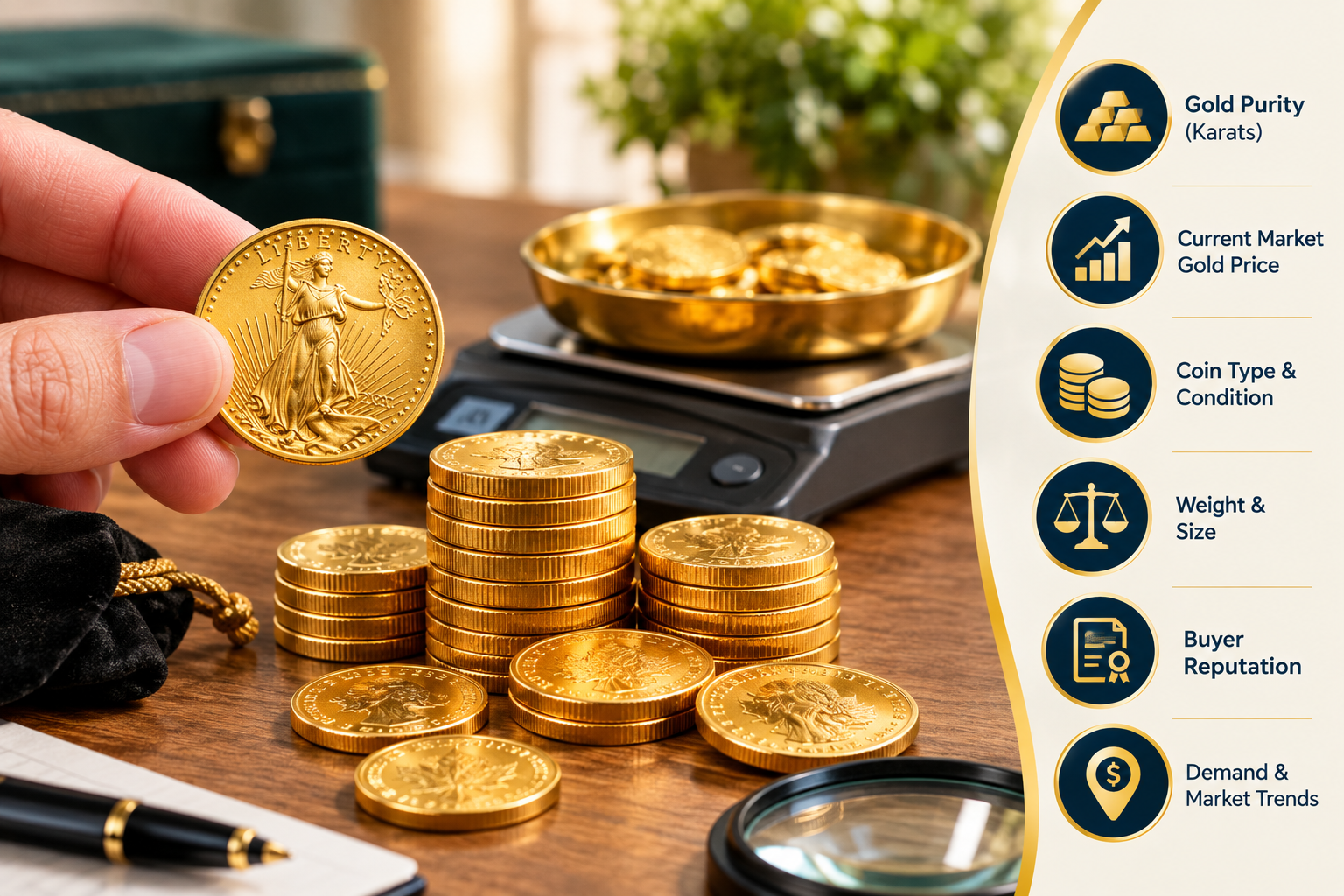
Selling a gold coin is not as simple as looking at the number printed on the coin or checking its original purchase price. The amount you receive depends on several factors, including the coin’s gold content, purity, weight, current gold market value, and what type of coin you have.
For someone looking for Cash for Gold in Alief, TX, understanding these factors can make the selling process easier. It also helps you know what information matters when a buyer examines your coins and determines their value.
Start With the Gold Content
The first thing to understand is that not every gold coin contains the same amount of pure gold.
Some coins are made from nearly pure gold, while others contain gold mixed with other metals. A coin’s purity is commonly expressed using karats or fineness.
For example, 24-karat gold contains a higher proportion of pure gold than 18-karat gold. Fineness uses a number such as .999 to indicate very high purity.
This distinction matters because two coins with the same weight can have different amounts of actual gold.
When a coin is evaluated, the buyer needs to determine how much precious metal it contains before calculating an offer.
Weight Plays an Important Role
Gold is commonly valued by weight, so the coin’s mass is another major factor.
A heavier coin may contain more gold than a smaller coin, but weight alone does not determine its value. Purity must also be considered.
During an appraisal, the coin may be weighed and examined to establish its precious-metal content.
If you have several coins, they may not all have identical weights or purity levels. Keeping different coins together without knowing what each one is can make it harder to understand the value of the collection.
A proper evaluation looks at the individual pieces rather than assuming every coin is worth the same amount.
The Current Gold Market Matters
Gold prices change over time.
That means a coin that was purchased several years ago does not necessarily have the same market value today. The current precious-metal market is an important part of determining what the underlying gold is worth.
This is one reason sellers should avoid relying only on an old receipt, purchase price, or estimate from years ago.
The market value of the gold itself provides a more relevant starting point when evaluating a coin today.
However, the amount a buyer offers can differ from the raw market value because the transaction also involves the buyer’s costs, evaluation, processing, and other business considerations.
Not Every Gold Coin Is Valued the Same Way
Gold coins can have different characteristics beyond their metal content.
Some are bullion coins primarily valued for their precious-metal content. Others may have collectible, historical, or numismatic value.
The difference can be significant.
A coin that has collector demand may be worth more than its basic melt value depending on its rarity, condition, age, origin, and market demand.
That is why identifying the coin before selling it is useful.
Check for:
- The coin’s name or denomination
- Year of issue
- Country of origin
- Purity markings
- Weight
- Mint markings
- Visible condition
- Any unusual features
You do not need to become a coin specialist before asking for an appraisal. These details simply give the buyer more information to work with.
What Condition Tells a Buyer
Condition can matter differently depending on the type of coin.
For a common gold coin being valued primarily for its metal content, minor surface wear may have less impact than the coin’s gold weight and purity.
For a collectible coin, however, condition can be much more important.
Scratches, damage, cleaning, discoloration, or other alterations can affect collector interest.
This is why sellers should avoid cleaning or polishing an older coin simply because they want it to look newer. Changing the original surface can sometimes affect its collectible appeal.
If you are unsure whether a coin has collector potential, let the buyer examine it before making changes.
How Gold Coins Are Tested
A gold buyer needs to verify what a coin is made of before determining its value.
The evaluation may involve examining markings, checking weight and dimensions, and using appropriate testing methods to assess the metal.
Testing is particularly important when a seller has inherited coins, purchased them from an unknown source, or simply does not know their exact purity.
The goal is to establish what the buyer is actually purchasing.
Once the coin’s characteristics have been determined, the gold content can be considered alongside the current market value.
What About Damaged or Unwanted Coins?
A damaged gold coin is not automatically worthless.
If the coin contains genuine gold, its precious-metal content still has value. The question is whether the condition also affects any potential collector value.
The same applies to coins that are scratched, worn, outdated, or no longer wanted.
Someone searching for Sell Gold for Cash Near Me may have coins sitting in a drawer or safe because they are unsure what to do with them. Instead of guessing their value based on appearance, having the pieces evaluated provides more useful information.
The same principle applies to other unwanted gold items.
Selling Several Coins at Once
If you have a collection of gold coins, organize them before visiting a buyer.
Separate coins by type if possible and keep any original packaging, certificates, receipts, or documentation you already have.
Do not throw away paperwork simply because you assume it is unnecessary. Information about a coin’s origin or authenticity may help with identification.
At the same time, documentation does not automatically determine the current selling price. The physical coin and its current market characteristics still need to be evaluated.
For people searching for cash for gold coins near me, bringing the coins together for an in-person evaluation can provide a clearer picture of what the collection contains.
What Should You Ask Before Accepting an Offer?
You do not need to understand every part of the precious-metals market to ask useful questions.
Consider asking:
- How was the coin identified?
- What purity does it have?
- What is its weight?
- How much gold does it contain?
- Is the offer based primarily on metal value?
- Does the coin have characteristics that could affect its collectible value?
- What factors were considered when determining the offer?
Clear answers can help you understand where the number comes from rather than focusing only on the final amount.
If you are comparing Cash for Gold services Near Me, look for a process that gives you an understandable explanation of how the items are evaluated.
Frequently Asked Questions
How is the value of a gold coin determined?
The value generally starts with the coin’s gold content, which depends on its weight and purity. Current gold market prices also matter. Certain coins may have additional collectible value depending on their rarity, condition, and demand.
Are damaged gold coins still worth money?
Yes. Damage does not necessarily eliminate the value of the gold contained in a coin. However, damage can affect collectible value for coins that have numismatic or historical interest.
Should I clean my gold coins before selling them?
It is usually better not to clean or polish older or potentially collectible coins before having them evaluated. Cleaning can alter the original surface and may affect collector interest.
Do all gold coins have the same value?
No. Gold coins can differ in weight, purity, design, origin, age, condition, and collector demand. Two coins that look similar may have different values after examination.
What should I bring when selling gold coins?
Bring the coins themselves along with any original packaging, certificates, receipts, or other documentation you already have. These materials may help with identification, although the physical coin still needs to be evaluated.
Final Thought
A gold coin can have more going on than its appearance suggests. Weight, purity, market conditions, coin type, condition, and potential collector interest can all affect how it is evaluated.
That is why guessing from an internet price chart or an old purchase receipt may not tell you what your specific coin is worth today.
For Alief-area sellers, Cash Cash 4 Gold provides a place to have gold items evaluated and discuss a cash offer based on the pieces being sold.
Before accepting an offer, know what you have, understand the basic factors affecting its value, and ask questions about the evaluation. That gives you a clearer basis for deciding whether selling your gold coins makes sense.